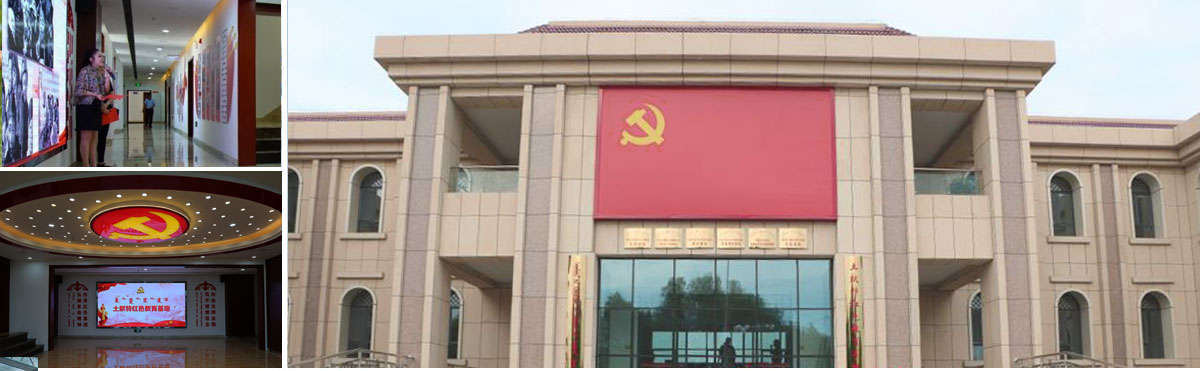

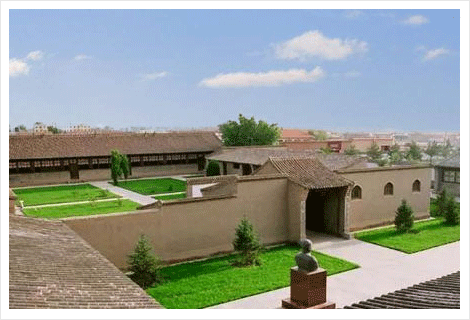
 The former residence of Ulanhu is located in the Tabussai Village of Tumotezuoqi, Inner Mongolia Autonomous Region. It was a residential house with strong folk customs in the northern part of China in the early part of the last century. The former residence includes more than 20 rooms including the main house, the east and west rooms, the mill house, the mill room and the grain warehouse. It was opened to tourists after being rebuilt in 2006. The entire building has the original appearance of the former residence, the exhibition room, the painting and calligraphy hall, the audio-visual hall, the monument wall, the Huaize Pavilion, the parking lot, the scene of the Wulanfu family's grinding and drying of food, and the exhibition of the beaches of Ulanhu's childhood. The total area is 20 acres.
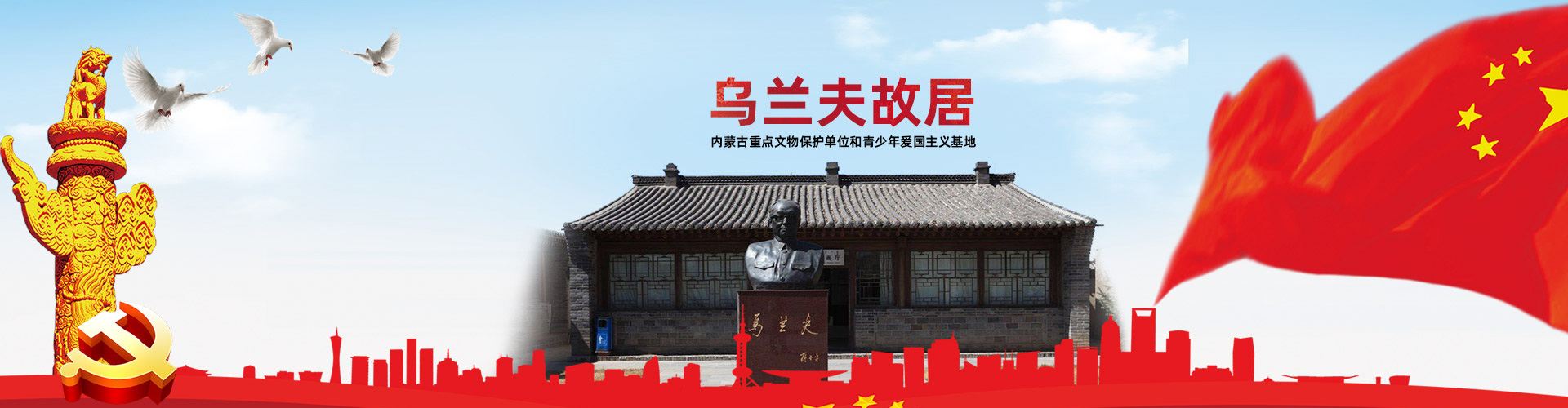
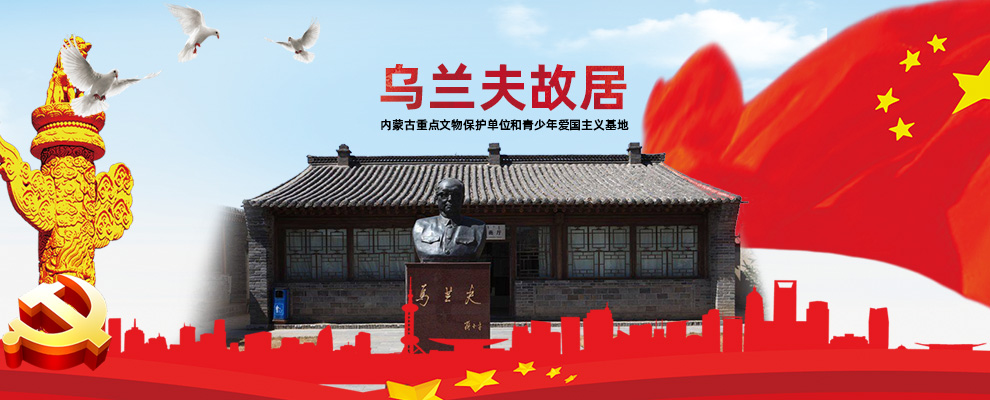
The former residence of Ulanhu is located in the village of Tabu in Tumote Zuoqi. It is an ordinary farmyard, with a gate to the south. There are 5 main rooms and east and west wing rooms. On December 23, 1906, Ulanhu was born here. From 1906 to 1919, he spent his childhood and adolescence. In 1919, Wu Lanfu left his hometown to return to Guiqi (now Hohhot) to study. In 1923, he was admitted to the Beiping Mongolian and Tibetan School and began to join the revolution. In 1929, Ulanfu returned from the Soviet Union Sun Yat-Sen University in Moscow, returned to his hometown to carry out revolutionary activities, and established a dozen contact points and peasant associations in the surrounding villages as the center. He launched a struggle against rent and tax, and delivered the party organization. Two groups of revolutionary youth. In September 1931, Ulanfu accepted the instructions of Wang Ruofei, engaged in party affairs, military transportation and intelligence work, and screened the intelligence personnel sent by his superiors with his family in the house. Before the liberation, the former residence of Ulanhu was destroyed by the enemy. The former residence was repaired in 1987 and officially opened in October 1991. In the courtyard, a bronze statue of Ulanhu’s bust is displayed, showing photos of Ulanhu’s youth and his parents.
The former residence of Ulanhu was the place where Comrade Ulanf was born, raised and engaged in revolutionary activities in the early days. The former residence of Wu Lao was identified as a key cultural relics protection unit and a youth patriotism base by the autonomous region in 1991. In 2005, it was identified by the State Council as one of the 100 red tourist attractions in the country and the national AAA tourist attraction. In 2006, the company invested 3 million yuan to comprehensively expand and repair the former residence of Wu Lao. The former residence area has expanded from the past 3 mu to the current 24 mu (666 m2 per mu). The entire building functional area truly reproduces Comrade Wu Lao. Glorious and fighting life. It is a unique venue that displays my red culture, inherits red cultural genes, and conducts red education.